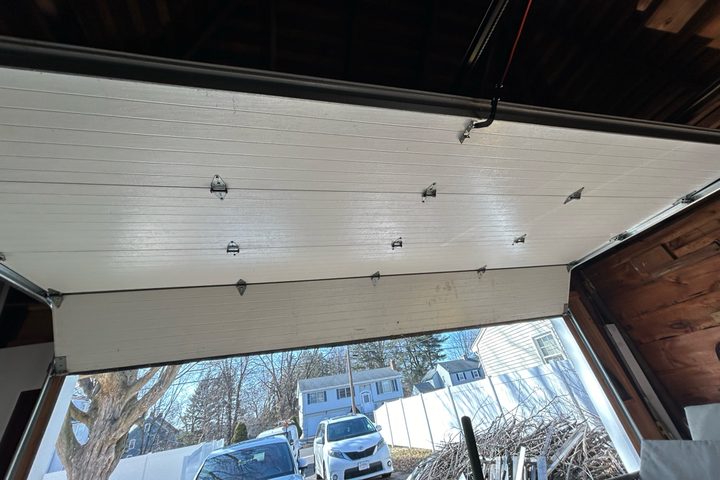
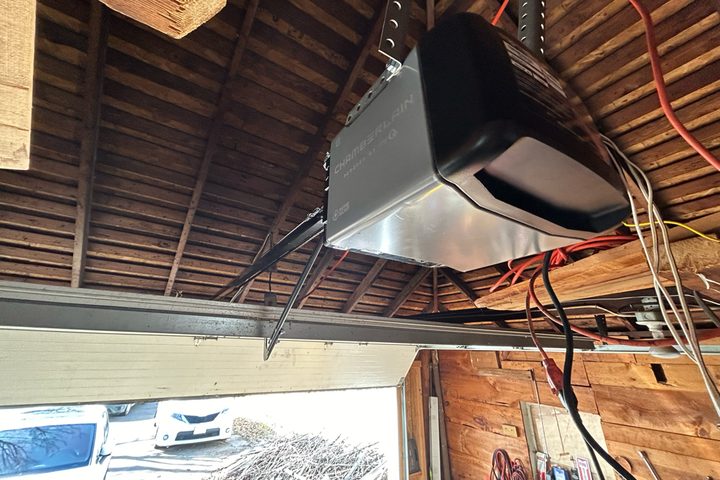
Grouped by what the door is doing, not by what the part is called
Nobody rings up asking for a torsion spring. They ring up because the door came down hard, or it will not close, or something hit it, or the loading bay has stopped halfway and the shop is open to the street. So the five groups below start where you start, and each one names the parts it usually turns out to be.
Every one of the eight things we work on sits under exactly one of those five, and each has its own section further down with the detail: what the fault is, what causes it, and what a technician will say to you on site.
The pattern is the same in all eight. The part gets named, the reason gets explained, and the figure arrives afterwards rather than instead.

Five symptoms, eight things we work on
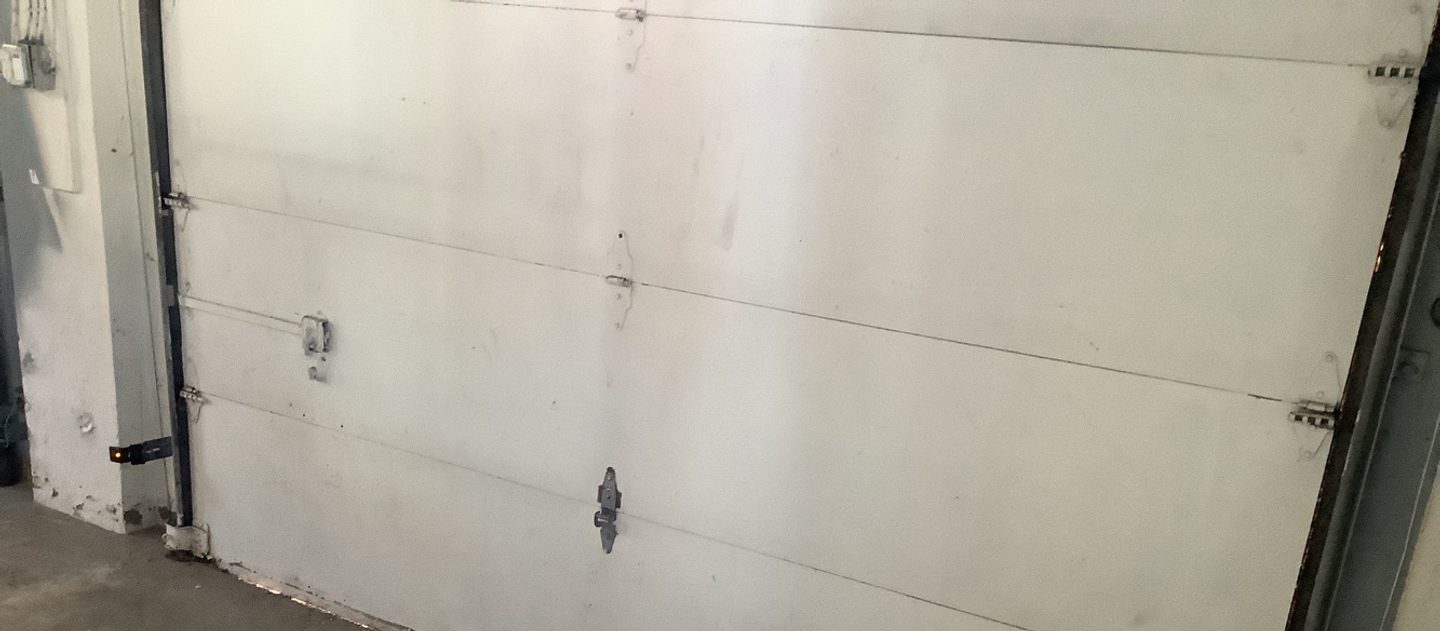
Spring repair and replacement
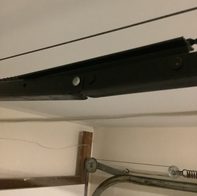
Springs are the reason a two hundred pound door feels light. Torsion springs sit on a shaft above the opening and wind as the door comes down; extension springs run beside the horizontal track and stretch instead. Either way they are storing the door’s weight, and either way they are under load whether the door is up or down.
When one breaks you usually hear it. What follows is a door that will not lift by hand, or an opener straining and stopping. Replacing a broken spring on a two-spring door and leaving the other in place is a short-lived repair, and we will tell you that before you ask.
What you are told on site: which spring failed, whether it went from cycles or from rust, what the door weighs once measured, and whether the replacement is sized for the door you have.
Opener repair and installation
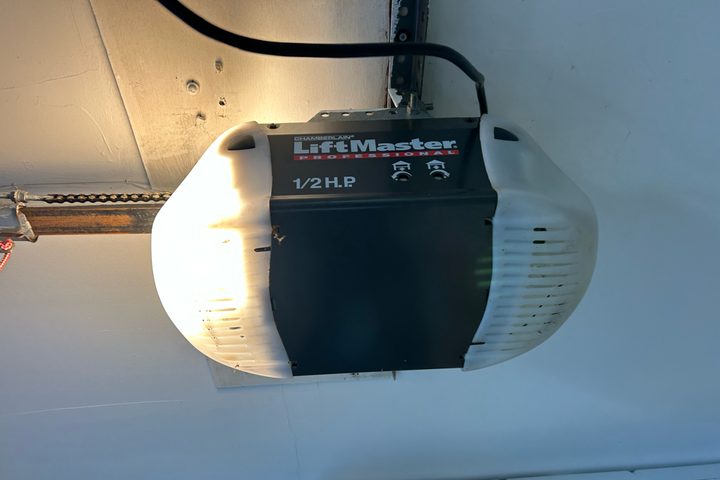
An opener is a small motor doing a job that the springs are supposed to make easy. That is worth knowing, because most openers we are called out to are not broken at all — they are giving up on a door that has gone out of balance and become too heavy for them.
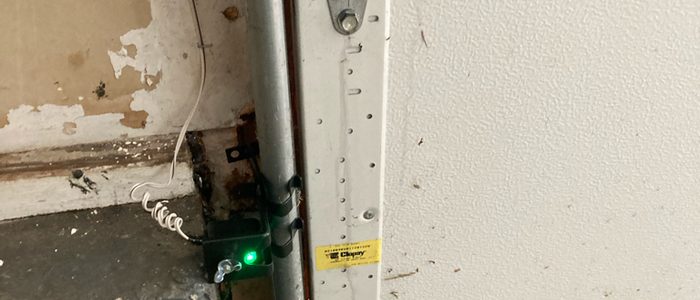
When the opener genuinely is the problem it is normally a stripped drive gear, a worn belt or chain, a failed logic board, or the safety sensors either side of the opening being dirty, knocked out of aim or wired loose. Sensors are the single most common cause of a door that refuses to close, and they are also the cheapest thing on the list.
What you are told on site: whether the door or the machine is at fault, which part inside the opener has gone, and where a repair stops making sense against a replacement.
Cable, roller and track repair
The cables carry the door’s weight down to the bottom brackets, the rollers keep it in line, and the track holds the whole path together. They fail quietly and they fail together, which is why one frayed cable is a reason to look hard at the other one.
Symptoms are a door that sits crooked, a grinding or popping noise as it travels, a gap at one bottom corner, or a cable visibly slack or wound off its drum. None of those get better on their own, and a cable that lets go under load moves fast.
What you are told on site: which cable or roller has worn and why, whether the track is bent or simply out of adjustment, and whether the wear is age or the door being out of balance and dragging on one side. Fixing the roller without fixing the balance just buys you a few months.
Panel replacement
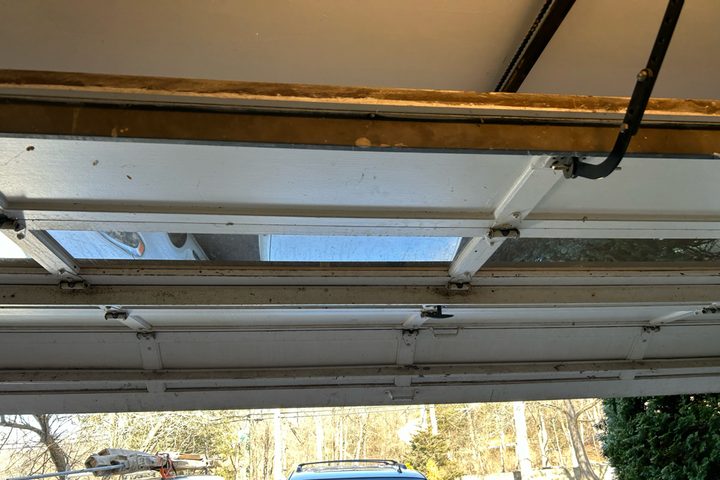
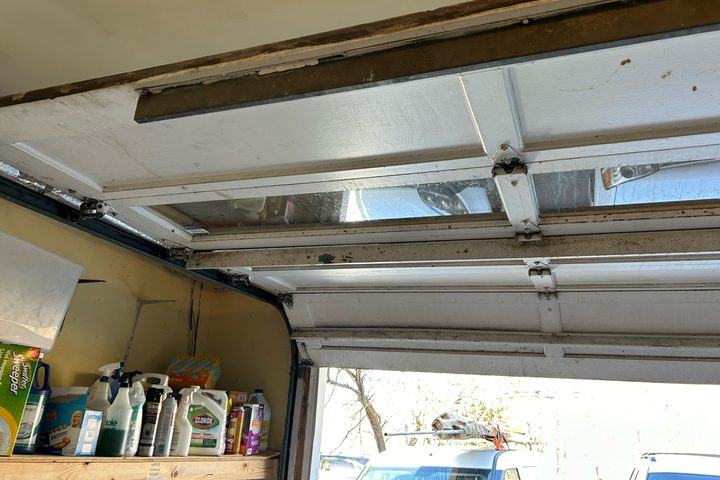
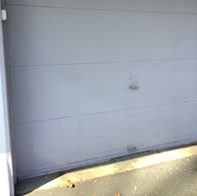
Sectional doors are built in horizontal sections for a reason: a damaged one can usually come out on its own. A reversed car, a hail strike or a basketball post does not automatically mean a new door, and being told otherwise is one of the more expensive misunderstandings in this trade.
What decides it is how far the impact went. A dented skin is cosmetic. A section that has bowed enough to bind in the track, or an impact that has taken hinges, rollers or the vertical rail with it, changes the answer. Age matters too, because a discontinued panel profile cannot always be matched.
What you are told on site: whether the section alone is damaged, whether the hardware behind it moved, whether a matching panel still exists for your door, and the point at which replacing sections stops being the sensible option.
Off-track and misaligned door correction
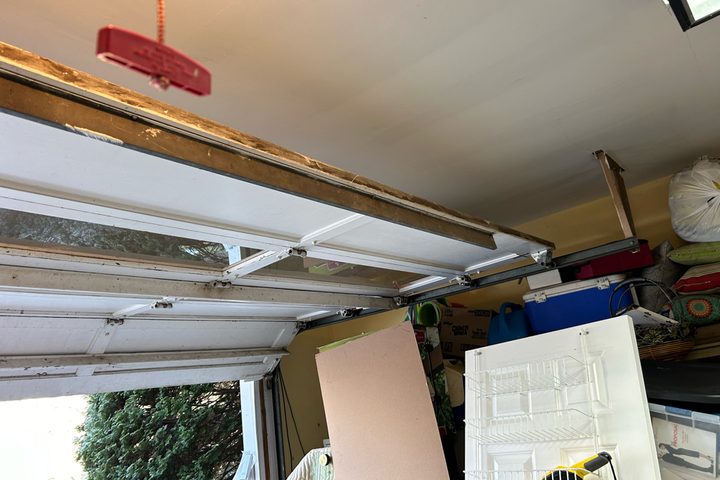
A door comes off its track when something interrupts the path: a roller that has worn down and dropped out, a cable that has come off its drum, an obstruction caught under the door as it closed, or a knock that has spread the rail. The door then hangs at an angle and stops being safe to operate.
It looks dramatic and it is not always a big repair, but it is one of the few faults where using the opener again can turn a cheap fix into an expensive one. If your door is hanging, leave it and say so when you call.
What you are told on site: what let go first, whether the track can be straightened or has to be replaced, whether the door itself has been twisted by hanging, and what caused it in the first place — because a door that has come off once with no explanation will do it again.
New residential door installation
Sometimes replacing the door is the honest answer: the sections are past matching, the frame has moved, or the repair list has grown longer than the door is worth. When that is the case we will say it plainly, and when it is not the case we will say that instead.
A new install is measured on site rather than from a catalogue, because headroom, backroom, side clearance and the state of the opening all decide what will actually fit. Insulated doors weigh more than uninsulated ones, so the springs are sized to the door that is going in, not to the door that came out.
What you are told on site: what will physically fit your opening, what the weight difference does to the existing opener, which parts of the old hardware are being reused and which are not, and what the door is balanced to when we leave.
Commercial and roll-up doors
Commercial doors fail on cycles rather than years. A loading bay door opening a hundred times a day will reach the end of a spring’s life in a fraction of the time a house door takes, so the useful question is how hard the door works, not how old it is.
Roll-up doors are a different machine again. A curtain of slats winds onto a barrel above the opening instead of running back on horizontal track, so the failure modes are barrel bearings, slat damage, guides packed with debris and counterbalance tension rather than rollers and hinges.
What you are told on site: which failure you have, whether the door can stay in service while a part is ordered, what the realistic cycle life of the replacement is for your traffic, and what a maintenance interval would need to be to stay ahead of it.
Annual maintenance and tune-up
Most of what we replace in an emergency was visible months earlier. A maintenance visit is a technician going over the whole door once a year with the opener disconnected, which is the only way to find out what the door is really doing.
The pass covers balance by hand, spring condition and cycle wear, cable condition at the drum and the bottom bracket, rollers and bearings, hinge play, track alignment and fixings, the safety reverse, the sensors, and the weather seal.
What you are told afterwards: everything we adjusted, everything that is worn but not yet worth replacing, and roughly how long that list has before it becomes a call-out. If the door is in good order the report says so and there is nothing to buy, which happens more often than you would expect.
Questions we get asked on the phone
- Nine times out of ten it is the safety sensors either side of the opening - misaligned, dirty, or with a loose wire. The other common cause is a down-force setting that is too tight for a door that has lost some of its balance.
- Torsion springs sit on a shaft above the opening and wind up as the door closes. Extension springs run along the horizontal tracks and stretch instead. Both store the energy that makes a heavy door feel light, and both are under load whether the door is up or down.
- Noise usually points at hardware rather than the opener. Worn rollers, dry hinges, loose track bolts and an unbalanced door each have their own sound. A grinding noise from the top of the opening is worth looking at sooner rather than later.
- Often yes, if the rest of the door is straight and the section is still made in a matching profile. Where the door has taken a hit hard enough to twist the struts or the track, replacing the section alone will not hold.
- Once a year for a door in normal residential use, and more often for a door cycled several times a day. A service is an inspection, a lubrication, a balance check and a re-torque of the hardware that vibration loosens.
- No. With a spring broken the opener is lifting the full weight of the door, which is what bends track, snaps cables and burns out a motor. Leave the door down and disengage the opener until it has been looked at.
Not sure which one it is? Describe it and we will work it out
Where we work from

Book a garage door visit
- (918) 555-0117
- 7 days, 7:00 AM - 7:00 PM
- 4418 Kestrel Hollow, Broken Arrow, OK 74012
Serving Broken Arrow and the greater Tulsa metro.
- 4.9 / 5 average rating
- Licensed, bonded & insured — OK contractor #GD-04471